Workflow Studio
Model stages, tasks, forms, uploads, assignments, and the data your process needs. Xena helps assemble it from your description; your team keeps control of the final design.
Tell Xena what must be collected, from whom, what makes it acceptable, and who reviews it. She builds the forms, uploads, stages, tasks, and acceptance rules in Workflow Studio. You review the result, publish it, and send the first request, all in the same system.
Skip the blank canvas and the translation layer between the person who knows the work and the person configuring the system. Build in the same place the workflow will run.
Xena turns the conversation into stages, tasks, forms, and upload requirements inside Studio, where your team can review every detail before publishing.
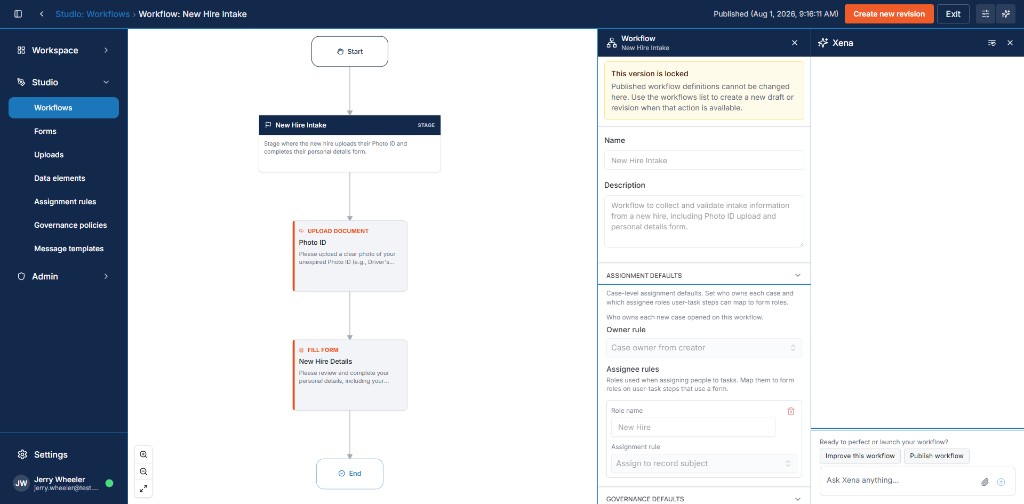
Tell Xena what must be collected, from whom, what makes it acceptable, and who reviews it. Start in plain language or attach source documents.
Xena builds the workflow, forms, data fields, upload requirements, stages, and tasks inside Workflow Studio, not in a slide deck.
Review the flow, tighten the requirements, set assignments, and fix anything that would keep the workflow from going live.
You decide what goes live. Once the version is ready, publish it and start a real case without rebuilding the process in another tool.
Xenqu connects workflow design to live case execution, so the process you approve is the process your team and the people you're collecting from actually use.
Model stages, tasks, forms, uploads, assignments, and the data your process needs. Xena helps assemble it from your description; your team keeps control of the final design.
Every case follows the workflow version you published, with clear status at every step - from the subject file down to each piece of work and who owes it.
Xena chases every party on the case: adjusting email or SMS outreach to each reply, holding people to the date they promised, and escalating what needs judgment with the case context.
Collect forms, documents, photos, and supporting data in one process instead of stitching together links, inboxes, and trackers - every piece landing in the same case file.
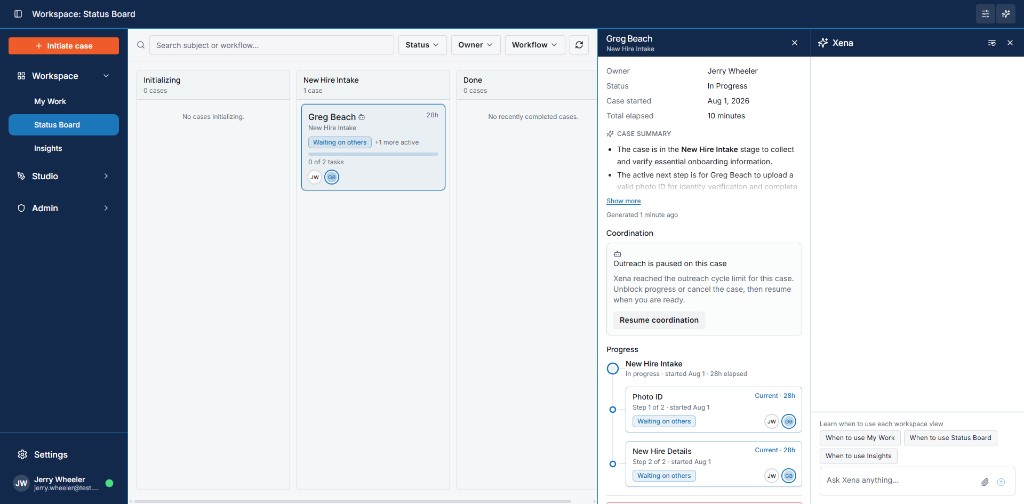
The status board keeps progress, exceptions, case context, and coordination visible without forcing your team to reconcile a separate tracker.
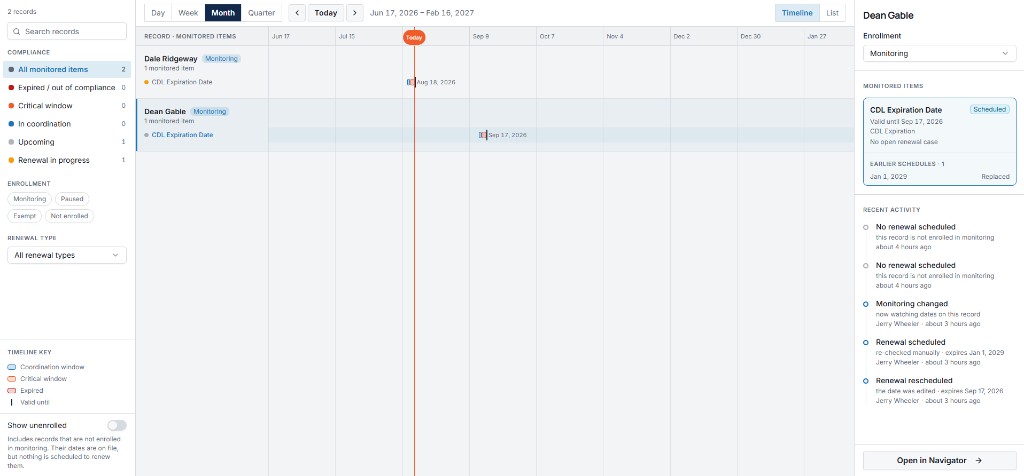
After the first collection finishes, Xenqu keeps watching expiration dates on one timeline. See who is coming due, who is already being chased for a renewal, and who has lapsed - Xena handles the follow-up until new proof arrives. When the new date lands, watching continues. Not a fixed reminder countdown.
Speed is not enough. You also need a clear answer to what happened, who acted, which rules applied, and whether submitted data still verifies.
Outreach, replies, delivery events, and admin actions are recorded in an audit trail you can review in Xenqu.
For forms that need stronger proof, seal each submission so its field data is bound to a verifiable hash, signature, and timestamp.
Nothing goes live until you publish it. Once a workflow version is published, it does not change underfoot, and cases already in progress keep the version they started with.
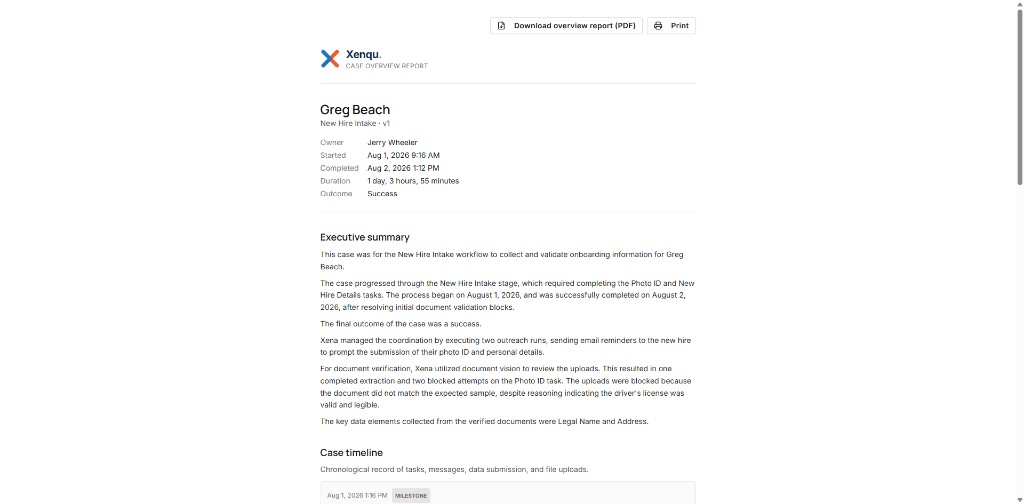
A completed case produces a readable overview with its owner, timing, outcome, executive summary, and chronological activity ready to review or export.
Everyone sees what is waiting, what came back, and where a person needs to step in, without maintaining a second tracker.
Start with a process your team already runs by hand and build the first working workflow with Xena.